Why Embedded Systems Students Fail Interviews and How to Prepare
Discover the most common embedded systems interview mistakes and learn how to improve your fundamentals, project portfolio, problem-solving, and interview preparation.
Arshia Sharma
1/19/20265 min read
Why 80% of Embedded Systems Students Fail Interviews
Embedded systems is one of the most demanding yet rewarding engineering domains. It sits at the intersection of hardware, firmware, operating systems, and real-world constraints. Yet, despite years of study, certifications, and countless “embedded courses,” a shocking number of students fail embedded systems interviews.
This is not because they are incapable or unintelligent. It is because they are preparing the wrong way.
After interacting with hundreds of embedded aspirants—as a mentor, interviewer, and industry professional—I’ve noticed clear, repeatable patterns. These failures are not random. They stem from foundational gaps, misplaced priorities, and a misunderstanding of what companies actually expect from an embedded engineer.
Let’s break down the real reasons why nearly 80% of embedded systems students fail interviews, and more importantly, what can be done about it.
1. Weak Fundamentals in C Programming
Embedded systems interviews are not about writing fancy applications. They are about control, predictability, and understanding what happens at the hardware level. C is the backbone of embedded development, yet most students treat it like just another programming language.
Common problems interviewers observe:
Inability to explain pointers vs arrays
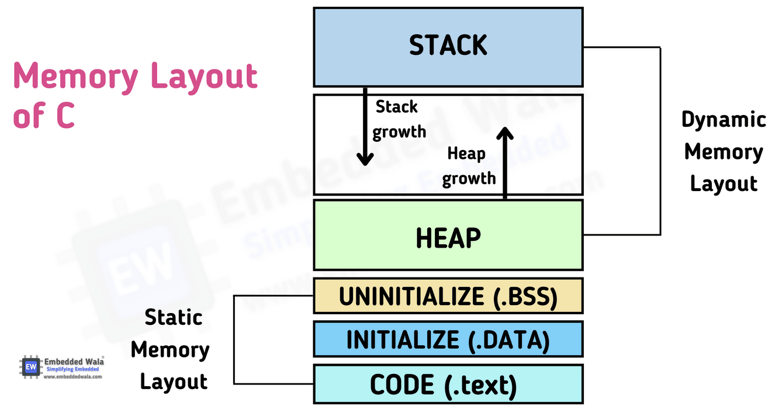
No clarity on stack vs heap
Confusion around volatile, const, and static
Poor understanding of memory layout
No idea how function calls work at the low level
Many students can write for loops and basic logic but freeze when asked:
“What happens in memory when this function is called?”
Embedded interviews are designed to test how deeply you understand C, not how quickly you can code.
Why this happens:
Most students learn C like application developers, not like system programmers.
2. Surface-Level Knowledge of Microcontrollers
A very common statement in resumes is:
“Worked with Arduino / STM32 / ESP32”
But when interviewers dig deeper, the reality is disappointing. Students often:
Use libraries without understanding what’s inside
Don’t know how GPIO actually works internally
Can’t explain clock configuration
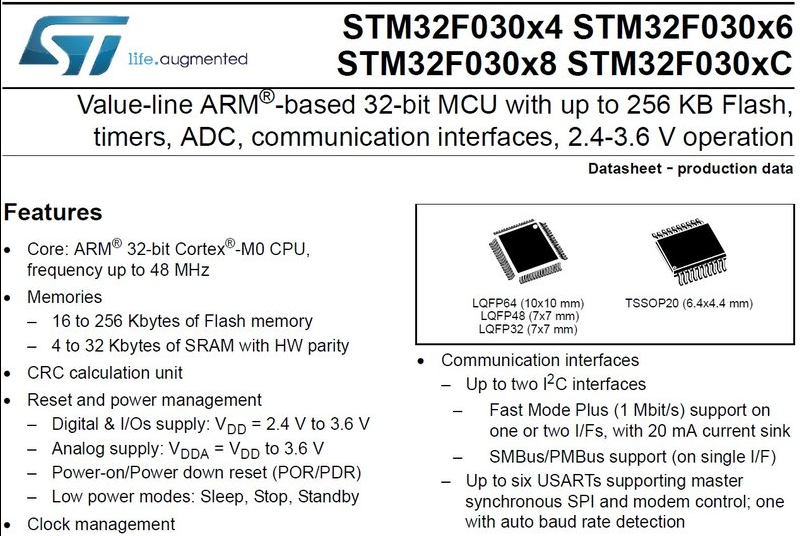
Have never read a datasheet seriously
Panic when registers are mentioned
If you cannot answer:
How does a GPIO pin change state internally?
What happens when you enable a peripheral clock?
Why do we configure pull-up or pull-down resistors?
Then you are not using a microcontroller—you are playing with it.
Embedded roles demand register-level thinking, not just board-level experimentation.
3. Ignoring Datasheets and Reference Manuals
One of the biggest red flags in an interview is when a student says:
“I usually follow tutorials”
Tutorials are fine for getting started. But embedded engineering is about reading datasheets and reference manuals.
Interviewers expect you to:
Navigate a datasheet confidently
Identify register descriptions
Understand timing diagrams
Interpret electrical characteristics
Most students avoid datasheets because they look intimidating. Unfortunately, this avoidance becomes obvious within the first 10 minutes of an interview.
In the real world, there is no tutorial for your exact problem.
Your only guide is the datasheet.
4. No Understanding of RTOS Concepts
RTOS has become a buzzword in embedded resumes:
“Knowledge of FreeRTOS”
But when asked basic questions, students struggle:
What is a task?
Difference between task and process?
What is priority inversion?
How does context switching work?
When to use mutex vs semaphore?
Many candidates can create tasks using sample code but don’t understand scheduling, timing, or synchronization.
Embedded interviews don’t expect you to be an RTOS expert—but they do expect conceptual clarity.
If you treat RTOS as a magic library, interviews will expose that gap instantly.
5. Poor Debugging Skills
One of the most critical skills in embedded engineering is debugging. Unfortunately, it is also the most neglected. Students often:
Depend only on printf
Don’t know how to use a debugger properly
Panic when the system hangs
Cannot trace race conditions or timing bugs
Interviewers love questions like:
“Your system hangs randomly after 3 hours. How will you debug it?”
Most students answer with silence—or generic responses.
Embedded systems fail silently. Debugging requires logical thinking, patience, and structured analysis, not guesswork.
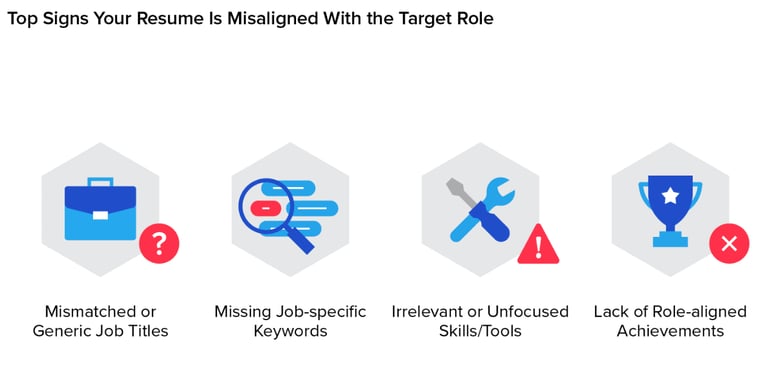
6. Resume-Course Mismatch
Another major reason students fail interviews is overloaded resumes.
Resumes list:
10 protocols
5 microcontrollers
3 RTOSes
Multiple “projects”
But when questioned:
Knowledge is shallow
Concepts are mixed up
Implementation details are missing
Interviewers don’t expect you to know everything.
They expect you to know what you claim.
A short resume with deep understanding beats a long resume with buzzwords—every time.
7. Lack of Real-World Thinking
Embedded systems are not just about making LEDs blink.
Interviewers look for:
Understanding of constraints
Power, memory, and timing trade-offs
Reliability and safety awareness
Error handling strategies
Many students cannot answer:
What happens if memory allocation fails?
How do you design for low power?
How do you handle hardware failure?
This shows a student mindset, not an engineer mindset.
8. Over-dependence on Tools and IDEs
Modern IDEs are powerful—but they hide complexity.
Students often:
Don’t understand startup code
Ignore linker scripts
Don’t know what happens before main()
Rely entirely on auto-generated code
When an interviewer asks:
“What happens after reset and before main()?”
Most students are clueless.
Embedded engineers must understand the boot process, not just the application layer.
9. Weak Communication and Explanation Skills
Even when students know the answer, they fail to explain clearly.
Embedded interviews are not exams—they are technical conversations. Common issues:
Jumping to conclusions
Using vague terms
Unable to draw or explain flow
Mixing hardware and software concepts incorrectly
If you cannot explain your thinking process, interviewers cannot trust your engineering decisions.
10. Wrong Learning Strategy
Perhaps the biggest reason of all.
Most students:
Jump from one board to another
Collect certificates instead of skills
Follow trends blindly
Skip fundamentals to reach “advanced topics”
Embedded systems is not a shortcut field.
It rewards depth, not speed.
How to Avoid Being in the 80%
If you want to clear embedded systems interviews, focus on:
Strong C fundamentals (memory, pointers, low-level behavior)
Register-level microcontroller understanding
Datasheet-driven development
Conceptual clarity in RTOS
Systematic debugging skills
Fewer tools, deeper knowledge
Real-world engineering thinking
Clear communication
Embedded engineering is hard—but it is fair.
Interviews don’t reject students randomly. They reject unprepared engineers.
Final Thought
If you’re struggling with embedded interviews, don’t lose confidence.
Failure here is usually not due to lack of intelligence—it’s due to misdirected preparation.
Fix the fundamentals.
Slow down.
Go deeper.
That’s how you move from the rejected 80% to the hired 20%.
If you’re serious about building strong embedded fundamentals and industry-ready skills, structured guidance and disciplined learning make all the difference.